Brush shapes and what each one is actually for
Large brush sets are good value and slightly misleading: most people use three or four shapes and leave the rest in the roll. Knowing what each shape does means the ones you use are the ones you meant to buy.
The shapes
Round
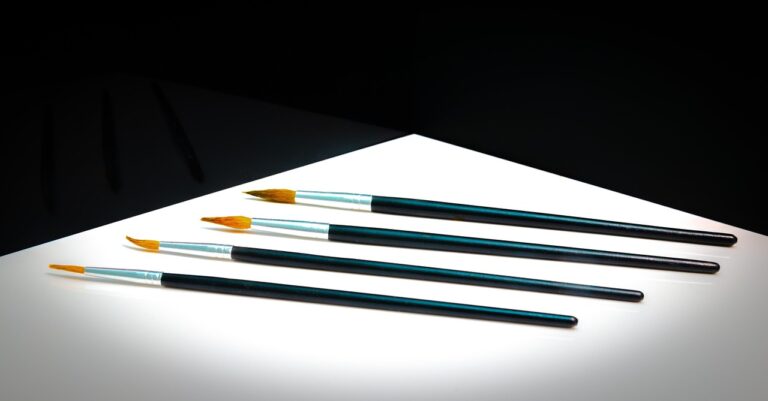
A round ferrule tapering to a point. The most versatile shape: the tip gives a fine line, the belly gives a broad stroke, and pressure moves between the two. If you own one brush, this is it.
Flat
A rectangular ferrule with long bristles and a straight edge. Covers ground quickly, gives a crisp edge on the flat and a thin line on the edge. The background brush.
Bright
A flat with shorter bristles. Stiffer and more controlled, better for short, deliberate marks and for pushing thick paint around. Good for impasto work.
Filbert
A flat with a rounded end. It combines the coverage of a flat with a softer edge, which makes it the natural choice for organic shapes — petals, clouds, anything that should not have a corner.
Rigger or liner
Very long, thin bristles. Holds a lot of paint and delivers a long unbroken thin line, which is why it is named after painting rigging on ships. For branches, wires, whiskers and signatures.
Fan
Bristles spread in a fan. Used for blending soft transitions and for texture — grass, foliage, hair. The most specialised shape on this list and the one most often unused.
Bristle type
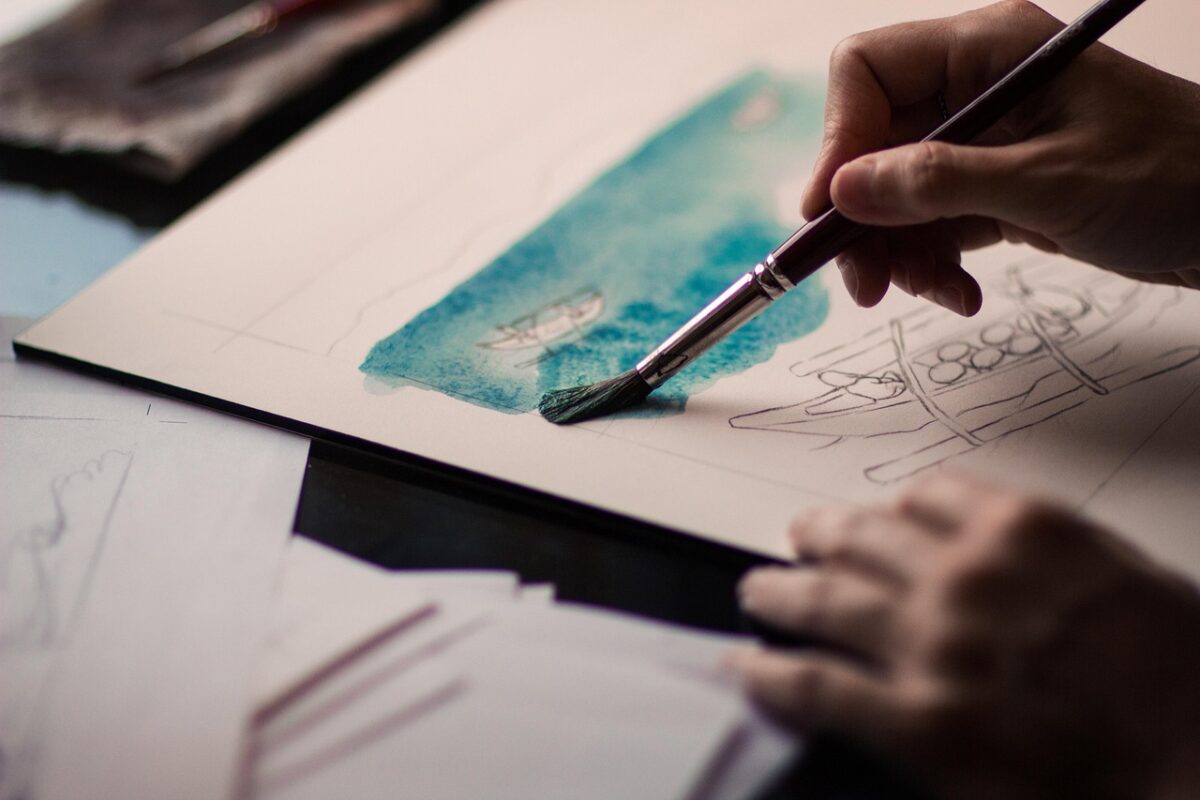
Synthetic bristles are the standard for acrylic. They are springy, they do not swell in water and they clean easily. Natural hog bristle is stiffer and holds heavy paint well; natural soft hair is generally an oil and watercolour choice and struggles in acrylic because it absorbs water.
For acrylic, synthetic is the right default, and it is what almost every set on this site contains.
Size numbering
Brush numbers are not standardised between makers. A number 6 round from one range may be visibly larger than a number 6 from another. The dimension in millimetres, where given, is more reliable than the number.
Three brushes that cover most work
If a set is too much, this is a complete kit:
- A large flat, for backgrounds and covering ground.
- A medium round or filbert, for the main subject.
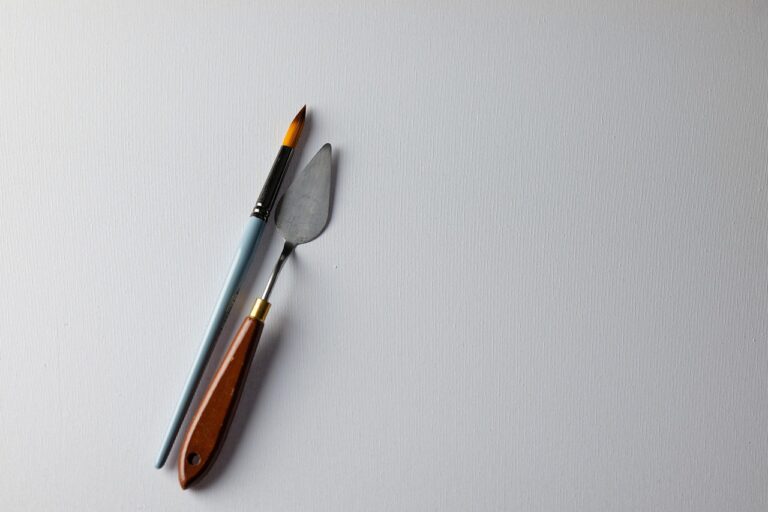
- A small round or rigger, for detail and edges.
Everything else is refinement. Adding a fan and a bright later is a sensible second step.
How brushes die
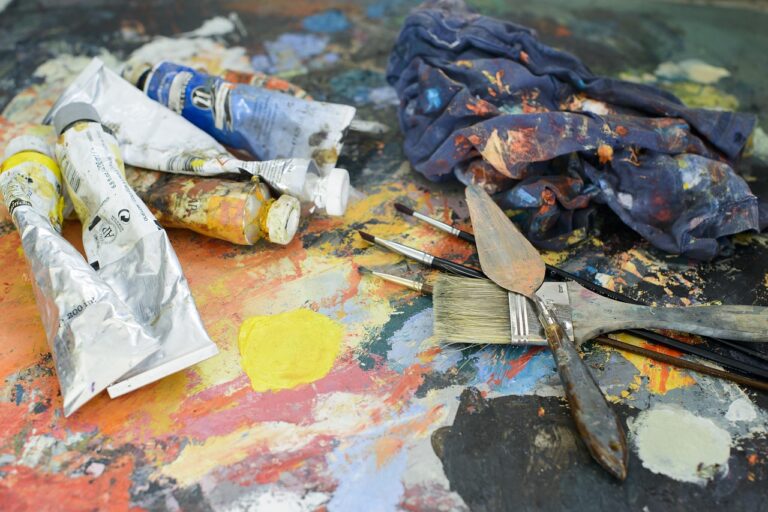
Almost always the same way: acrylic dries in the ferrule, at the base of the bristles where it is hardest to see. Once paint has cured in there, the bristles splay permanently and the shape never comes back.
The prevention is trivial — do not let a brush stand in water for long periods, and rinse to the ferrule rather than to the tip. Our note on brush care goes through the routine.
Practical checks before buying
- Prefer synthetic bristles for acrylic.
- Check millimetre sizes rather than trusting brush numbers across makers.
- Make sure a set includes at least one large flat and one small detail brush.
- A set of three good brushes beats a set of many mediocre ones.
- Check whether the set is a roll, a case or loose if it will be carried.
Holding the brush further back
Most beginners grip a brush like a pen, close to the ferrule. That gives maximum control and minimum range, which is why early paintings are often tight and small in gesture.
Holding further down the handle, with a looser grip, produces longer and more fluid strokes and uses the whole arm rather than the fingers. It feels less controlled and produces better marks.
The pen grip still has its place for detail work with a small round. The point is having both available rather than defaulting to one.
One brush per colour family
Where a painting has a warm passage and a cool passage, using a separate brush for each saves constant rinsing and keeps both colours cleaner. Two mid-size brushes on the go is a small habit that speeds up a session considerably.
Where this sits in the shop
Everything discussed above comes back to one part of the shop: Acrylic Paint Sets, which currently holds 5 listings between $9.99 and $99.95. The whole of it is picked and packed at PaintBox SoHo, 105 Thompson St, New York, NY, during Mon–Sat 11am–8pm, Sun 12pm–6pm — so anything written here can be checked by phoning the counter on ((212) 226-1300.
From our shelves
- ESRICH 26 PCS Acrylic Paint Set with 12 Colors Acrylic Paints — $9.99
- ESRICH 4 Set Acrylic Painting Kits for Adults and Couples — $29.99
- 149Pcs Deluxe Artist Painting Set with Aluminum and Beech Wood Easel, 48 Colors Acrylic & — $99.95
What we get asked about this
How fast are refunds?
We issue the refund within 5–7 business days of the return arriving. Your bank then takes its own one to five days to show it.
Can I cancel an order?
Yes, before it is picked — usually within about 12 hours on a business day. After dispatch it becomes a return.
Read next
- Student and artist grade acrylics: what actually differs
- Setting up a paint night for six people
- Choosing canvas: panels, boards or stretched
Ordering from PaintBox SoHo
Orders of $49.00 or more ship free anywhere in the United States, and a flat $5.99 covers everything below that. Handling takes 1–2 business days and carrier transit is normally 3–7 business days. Unused items can go back within 30 days, and if the mistake was ours we pay the return postage.
Questions about anything above go to [email protected], answered within 1 business day, or call (212) 226-1300. Full detail is on the Shipping Policy and Refund and Returns pages.